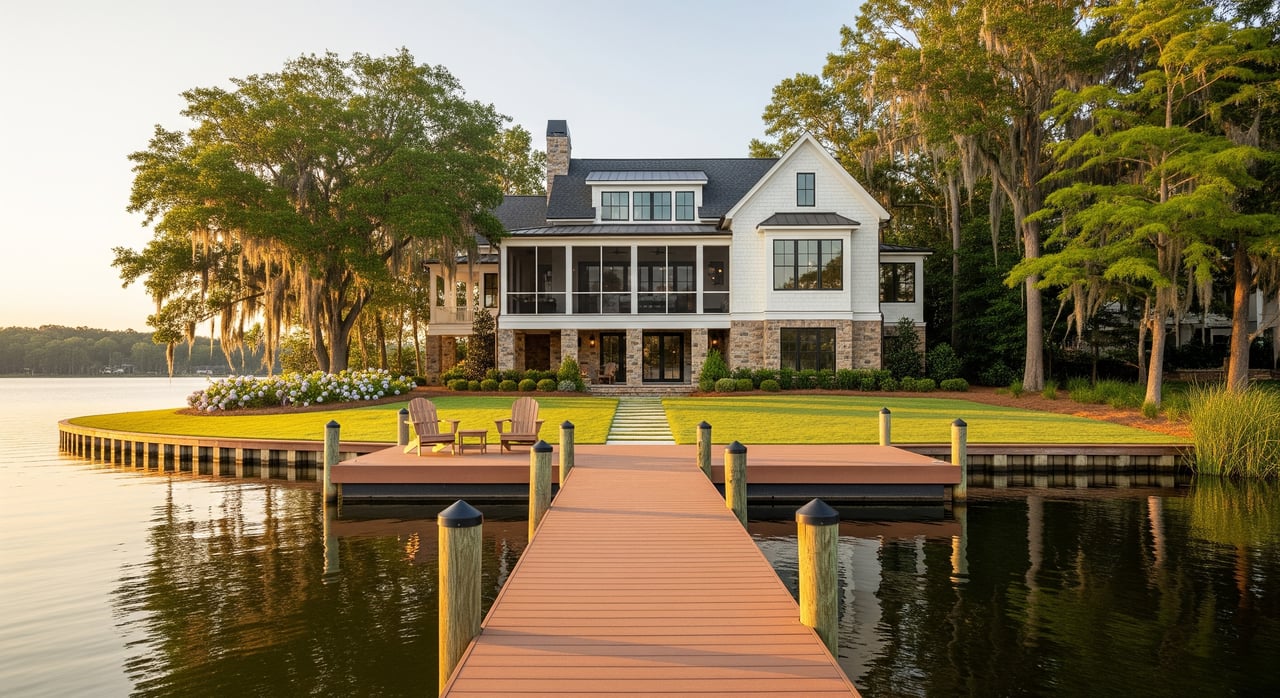
Dreaming about weekends on Lake Murray, but not sure what it really costs to keep a second home there? You’re not alone. The purchase price is only part of the picture. Ongoing expenses like taxes, insurance, HOA fees, dock upkeep, and utilities can add up fast if you don’t plan ahead.
This guide gives you a clear breakdown of typical cost categories, how to get accurate Lake Murray numbers, and a simple monthly budget model you can tailor to any property. If you live in or near 29649 and want a turnkey lake lifestyle within easy reach, this will help you budget confidently. Let’s dive in.
The real cost buckets
Property taxes
Property taxes are billed by the county where the home sits. Around Lake Murray, that can be Lexington, Richland, or Newberry County. Your tax bill depends on the assessed value, local millage, and your tax class. Second homes do not usually qualify for owner-occupied exemptions.
Key drivers include assessed value, millage rates, and any special district levies. Bills are typically annual. Check the parcel’s county for due dates and payment options.
Homeowners insurance
You’ll need coverage for the structure, contents, and liability. Lakeside homes sometimes require wind or hail endorsements. Premiums are based on replacement cost, construction type, deductible, claims history, and proximity to water.
Ask carriers whether flood is included or excluded. Many policies exclude flood by default.
Flood insurance
Flood coverage can come through the National Flood Insurance Program or private insurers. Whether you need it depends on the FEMA flood zone and elevation. Lenders usually require it for higher-risk zones.
Obtain or review an elevation certificate if available, then confirm the property’s FEMA designation before you quote.
HOA and country-club dues
Timberlake-style country-club communities often have two fees: an HOA that covers roads, landscaping, and common areas, and a separate country-club membership for golf, pool, and social amenities. Some clubs are optional, others require membership. There can also be special assessments.
Request the HOA fee schedule, reserve study, and recent meeting minutes. Ask the club about dues, initiation fees, and categories of membership.
Utilities and services
Plan for electric, water, sewer or septic, trash, and internet. Dominion Energy serves much of the Lake Murray area for electricity. Water and sewer can be municipal or county, or a home may have a well and septic.
If the property has septic, budget for routine pumping and maintenance. Ask the seller for recent utility bills to estimate usage.
Dock, slip, lift, and marina fees
Some properties include a private, deeded dock. Others rely on community docks or leased slips at a marina. Costs vary based on whether you own or rent the slip, lift equipment, materials, and maintenance needs.
Confirm permitting and shoreline rules before you plan any work. Ask about waiting lists for community or marina slips.
Maintenance, repairs, and replacements
Waterfront living means more exposure to sun and humidity. Budget for exterior paint and staining, deck work, dock upkeep, HVAC servicing, and pest control. Many owners set aside 1 to 3 percent of the home’s value per year for maintenance. Lake properties often trend to the higher end.
Large replacements like roofs, dock rebuilds, or lift systems should be planned as multi-year reserves.
Property management and security
If you plan to rent short-term or you will not visit often, consider management, cleaning, and landscaping. Fees vary with services provided and rental frequency. If you use smart locks, cameras, or alarm monitoring, add those to your monthly costs.
Rental-related taxes and rules
Renting your second home triggers state sales taxes and local accommodations taxes in many areas. Registration and remittance rules apply. Check state guidance and your specific county or municipality for local lodging taxes.
Financing costs
Your lender can estimate principal and interest, plus any escrowed taxes and insurance. Second homes sometimes have different underwriting and down payment requirements.
How to get Lake Murray numbers
Pin down your county and tax math
- Confirm whether the parcel is in Lexington, Richland, or Newberry County.
- Ask the county assessor or auditor for the assessed value and current millage rates, including school, county, municipal, and special district mills.
- Use this formula to estimate: Annual tax = taxable assessed value × (total millage ÷ 1,000). Assessment ratios and exemptions differ by class, so confirm rules for second homes through the county and the South Carolina Department of Revenue.
Quote insurance and flood correctly
- Request homeowners quotes from local agents and carriers that write lakefront properties.
- Check the FEMA Flood Map for the parcel. If it is in a Special Flood Hazard Area, get a flood quote and ask whether an elevation certificate can reduce the premium.
Verify HOA and club fees
- Ask the HOA manager for CC&Rs, bylaws, annual budget, reserve study, and the current fee schedule.
- Contact the associated country club for membership categories, initiation fees, and annual dues.
- Review recent meeting minutes for any special assessments under consideration.
Confirm utilities and services
- For electricity, check Dominion Energy service and rate info by address.
- For water and sewer, contact the applicable utility, such as a municipal system, county utility, or note if the home uses well and septic.
- Ask the seller for the last 12 months of bills to capture seasonal usage.
Understand docks, slips, and permitting
- Determine whether the dock is deeded to the lot, assigned by the HOA, or leased from a marina.
- Ask the HOA or marina for the current rate sheet, maintenance responsibilities, and any waiting lists.
- For shoreline or septic work, consult the county permitting office and the South Carolina Department of Health and Environmental Control.
Plan for rentals and management
- If you will rent, confirm state sales tax and any local accommodations taxes with the South Carolina Department of Revenue and your county.
- Interview local property managers for fee structures, cleaning costs, and services.
Build your monthly budget
Use this template to turn annual items into a monthly plan:
- Property tax (monthly) = annual property tax ÷ 12
- Homeowners insurance (monthly) = annual premium ÷ 12
- Flood insurance (monthly) = annual premium ÷ 12, if needed
- HOA dues (monthly)
- Country-club dues (monthly), if applicable
- Utilities (electric, water/sewer or septic service, trash, internet)
- Dock or slip costs (monthly), including lift maintenance or marina lease
- Routine maintenance reserve (monthly) = selected annual percentage of value ÷ 12
- Property management and cleaning (monthly), if used
- Miscellaneous contingency buffer
An illustrative example
The figures below are only an example to show structure. Always replace with parcel-specific quotes:
- Purchase price or market value: $500,000
- Property tax: $2,500 per year → $208 per month
- Homeowners insurance: $1,800 per year → $150 per month
- Flood insurance: $900 per year → $75 per month
- HOA: $1,200 per year → $100 per month
- Optional country-club dues: $3,000 per year → $250 per month
- Utilities: $250 per month
- Marina slip or dock maintenance: $1,200 per year → $100 per month
- Routine maintenance reserve: 1 percent of value per year = $5,000 → $417 per month
- Property management/cleaning: $150 per month average
- Contingency buffer: $100 per month
Illustrative totals:
- Basic ownership, no club membership: about $1,300 to $1,500 per month
- Full lifestyle with club and higher reserves: about $1,800 to $2,200 per month
Dock and club questions to ask
- Are slips deeded, assigned by the HOA, or leased from a marina?
- Is there a waiting list for slips or boat storage, and how long is it?
- Who pays for dock maintenance and replacement, and how are costs allocated?
- Are club memberships optional or mandatory? What are the categories and initiation fees?
- What recent or upcoming special assessments has the HOA or club approved?
If you plan to rent sometimes
- Confirm whether short-term rentals are allowed by the HOA and local ordinances.
- Register for state and local taxes if required. Ask how platform remittances work and what you must file yourself.
- Price out management, cleaning, linens, supplies, and guest support. Many managers charge a percentage of rental income plus per-visit fees.
- Update insurance to reflect rental use if applicable, including liability coverage.
Smart documentation checklist
Ask for these items during due diligence so you can tighten your budget with real numbers:
- Last 12 months of property tax and utility bills
- Insurance declarations page and any claims history, or a sample quote from an agent
- HOA CC&Rs, budget, reserve study, fee schedule, and recent board minutes
- Country-club membership rules, current dues, and any capital assessments
- Dock documents: deeded slip language, marina lease, maintenance records, and permits
- Recent invoices for dock repairs, roof, HVAC service, septic pumping, and pest control
- Flood elevation certificate and flood insurance history, if available
- Any active short-term rental registrations and HOA approvals
Common pitfalls to avoid
- Underestimating maintenance on exterior wood, decks, lifts, and docks
- Assuming flood insurance is unnecessary without confirming the FEMA zone
- Confusing HOA dues with separate country-club dues
- Believing a slip is included without verifying deed or assignment rules
- Forgetting county differences for taxes, utilities, and permitting
Next steps and local help
If a Lake Murray second home is on your radar, the right plan is simple. Price the home you want, then follow the steps above to replace every estimate with an address-specific number. You will see a clear monthly picture long before you write an offer.
When you are ready, let a local expert guide you through HOA documents, dock rules, flood maps, and real quotes so there are no surprises on closing day. Connect with Chad Jones to build your Lake Murray plan and tour properties that fit your budget and lifestyle.
FAQs
What are typical monthly costs for a Lake Murray second home?
- It varies widely by property and community, but a structured model that includes taxes, insurance, HOA, utilities, dock or slip, a maintenance reserve, and a contingency buffer will give you an accurate monthly range once you plug in address-specific quotes.
How do property taxes work for Lake Murray homes in different counties?
- Taxes depend on the county where the parcel sits, the assessed value, total millage, and your tax class; confirm figures with the county assessor or auditor and use the formula: annual tax equals taxable assessed value times total millage divided by 1,000.
Do I need flood insurance for a Lake Murray property?
- You need flood insurance if your lender requires it based on FEMA flood zone, or if you want the protection; verify the parcel’s FEMA designation and consider an elevation certificate when requesting quotes.
What is the difference between HOA dues and country-club dues?
- HOA dues fund community operations like roads, landscaping, and reserves, while country-club dues cover amenities such as golf, pool, and social events; club memberships may be optional or mandatory depending on the community.
How can I confirm dock or slip availability and costs?
- Ask the HOA or marina for the current policy, rate sheet, and any waiting lists, and verify whether slips are deeded, assigned, or leased so you understand maintenance and replacement responsibilities.
How should I budget for maintenance on a lake home?
- Many owners reserve 1 to 3 percent of the home’s value per year, with lakefront homes often at the higher end to account for exterior, deck, and dock wear, plus routine servicing for HVAC and pest control.